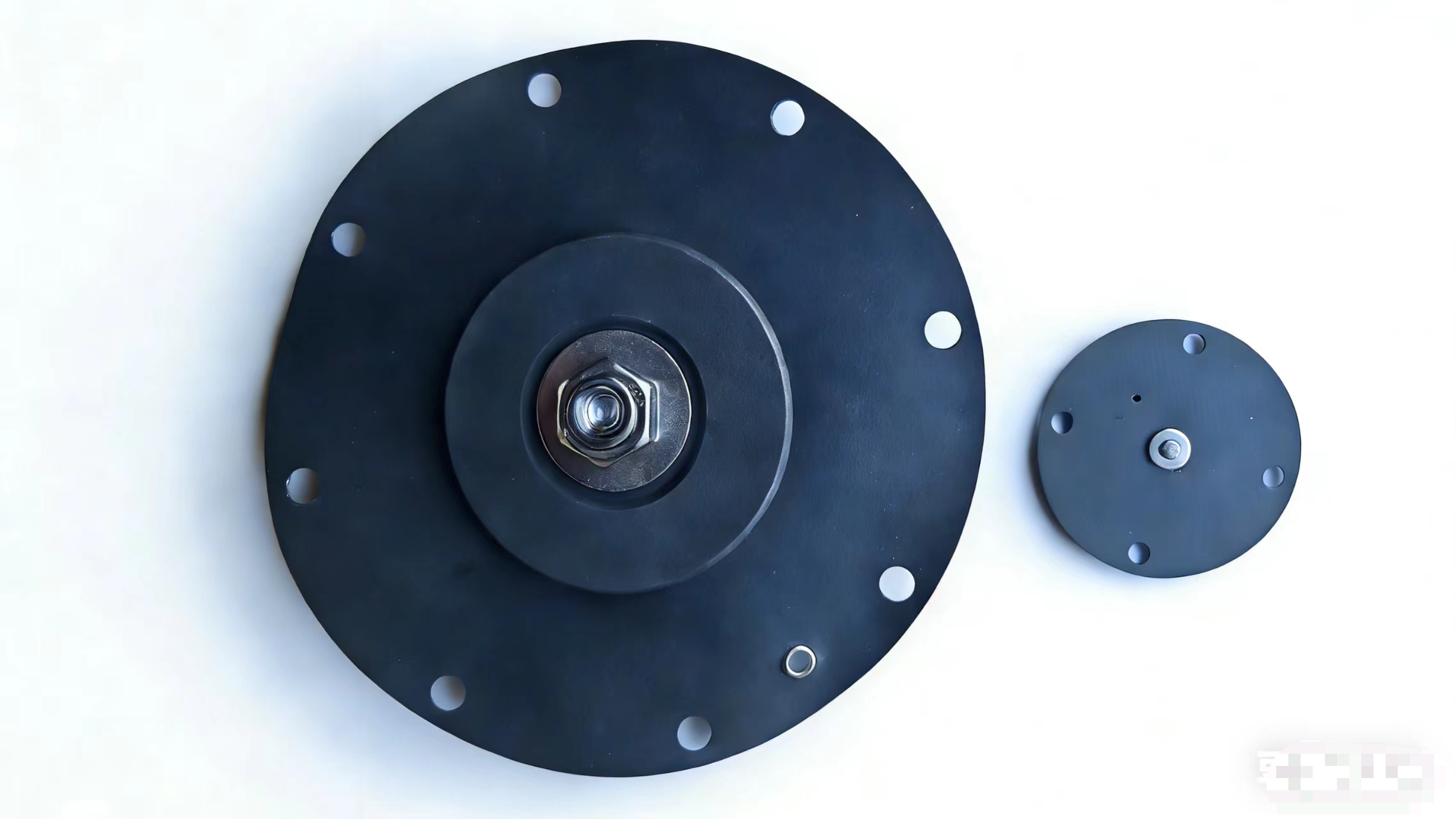
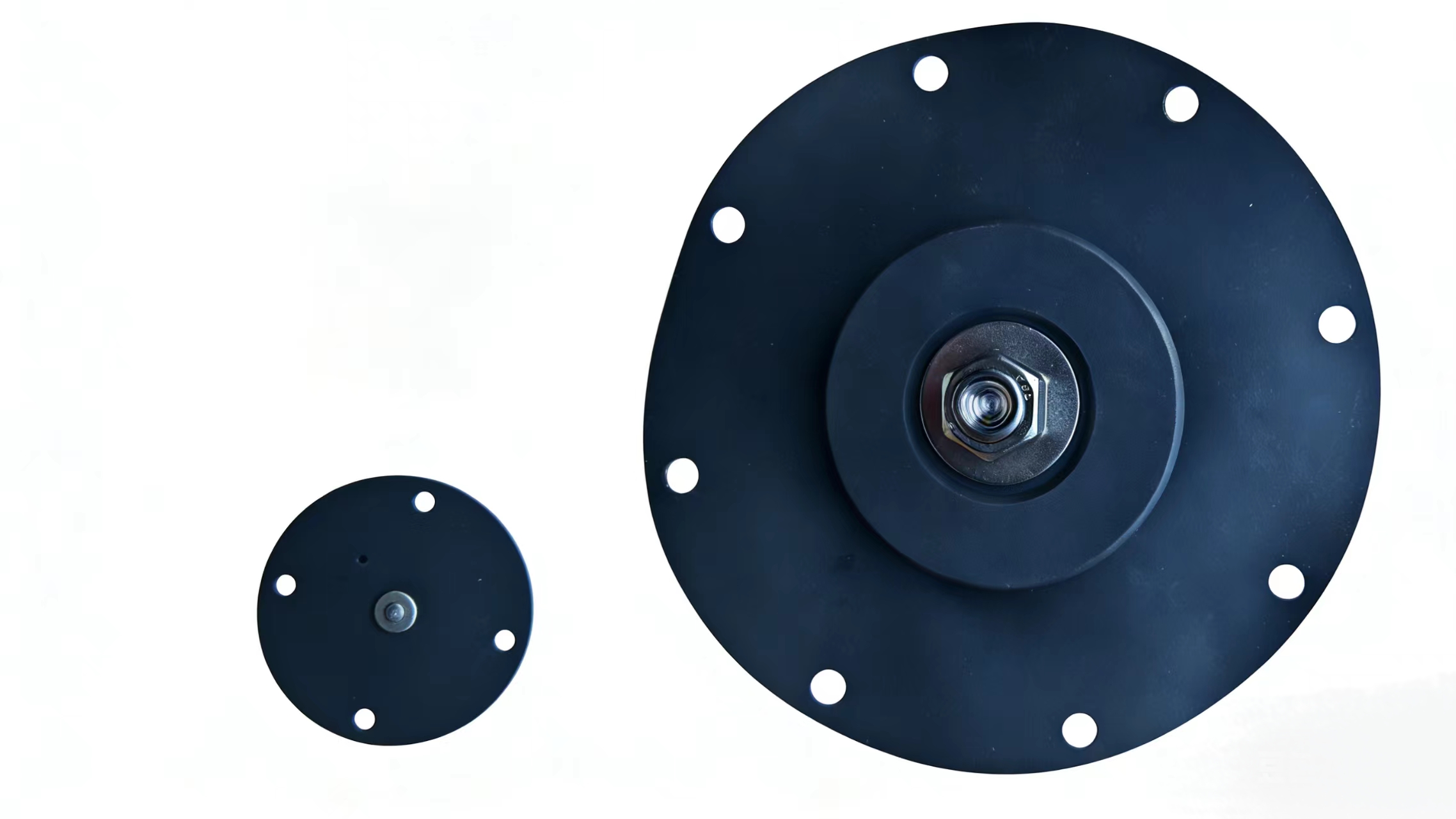
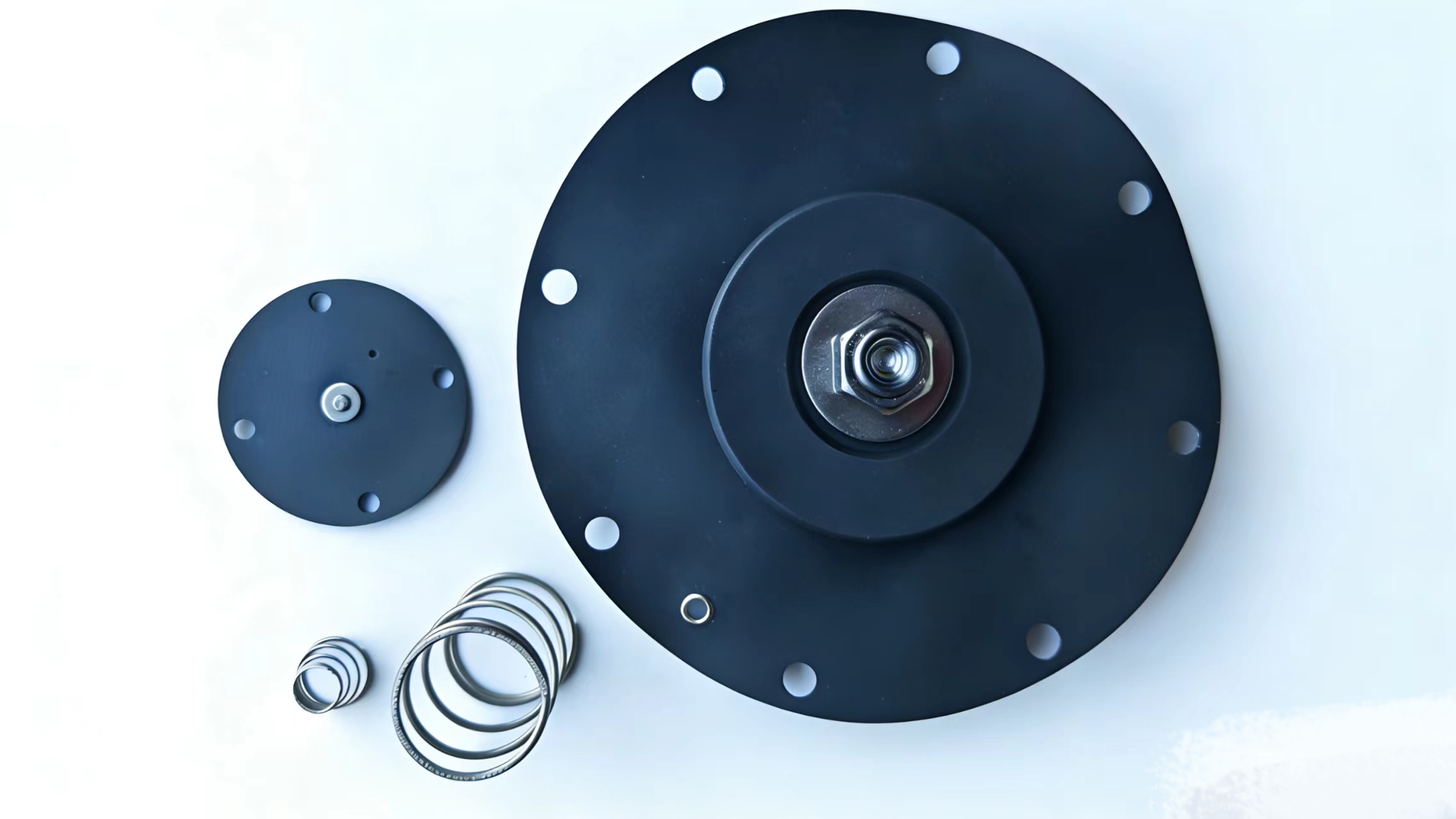
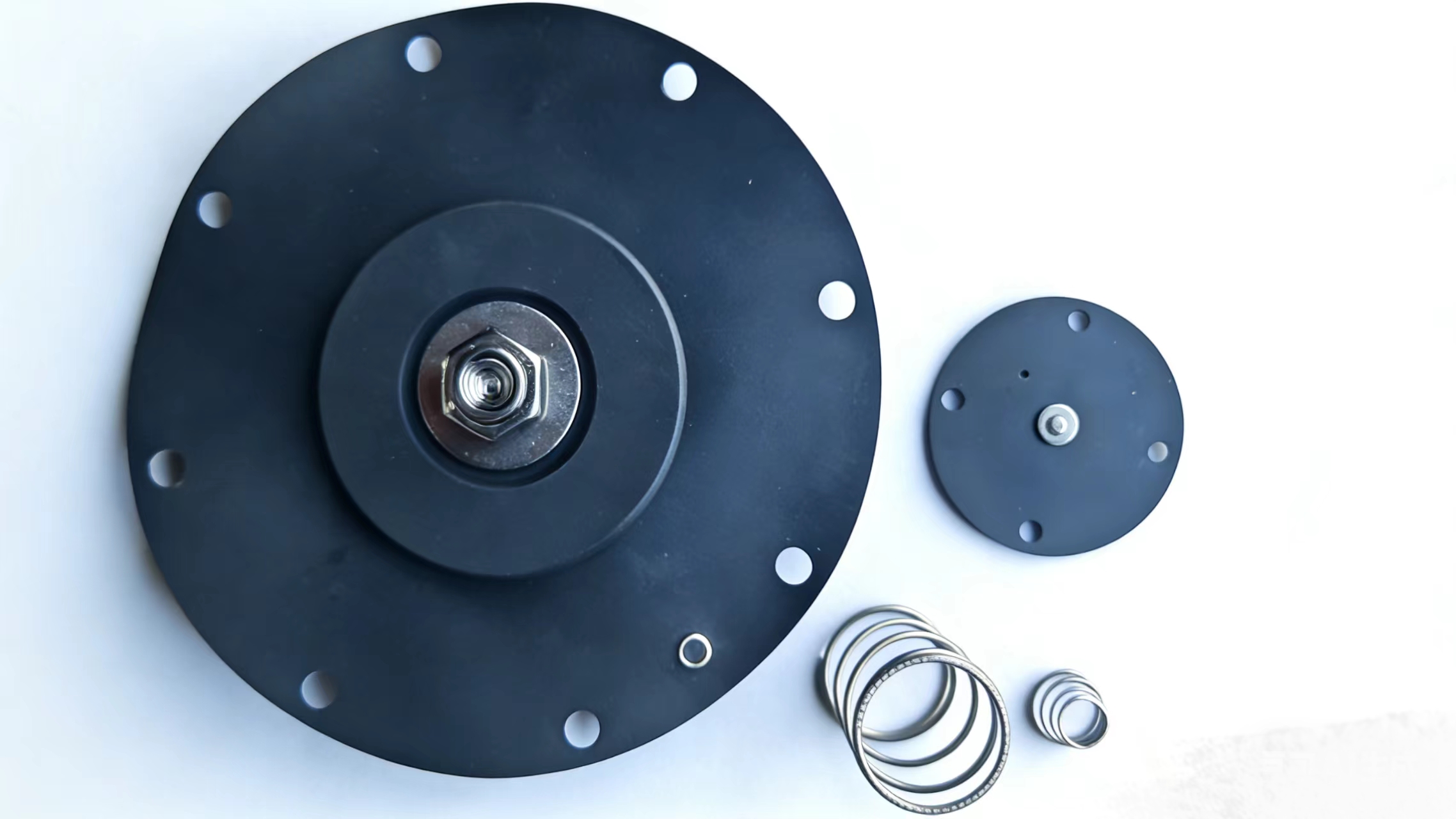
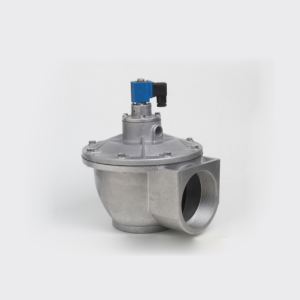
Pulse Valve Diaphragms – Core Principles and Material Classification
As the key component of pulse jet solenoid valves, pulse valve diaphragms play a decisive role in the stable operation of dust collection systems. Acting as a “flexible gate” that controls the on-off of compressed air, their performance directly affects the cleaning efficiency of filter bags, energy consumption of the system, and overall maintenance costs. To fully understand the functionality of pulse valve diaphragms, it is essential to explore their working mechanism and material classifications.
Working Principle of Pulse Valve Diaphragms
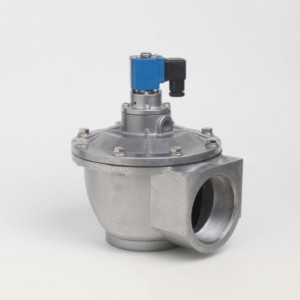
Most industrial pulse valves adopt a pilot-operated design, and the diaphragm is the core executing part of this design, realizing rapid opening and closing through pressure difference control. The working process can be divided into three stages:
In the standby state, the solenoid pilot valve is closed, blocking the exhaust channel above the main diaphragm. Compressed air enters the upper chamber of the diaphragm through a small air passage, creating a higher pressure above the diaphragm than below. This pressure difference presses the diaphragm tightly against the air outlet, keeping the pulse valve closed and preventing air leakage.
When the dust collector controller sends a cleaning signal, the solenoid pilot valve is energized and opens immediately. The compressed air in the upper chamber of the diaphragm is quickly discharged through the exhaust channel, causing the pressure above the diaphragm to drop sharply. Meanwhile, the pressure below the diaphragm remains unchanged, forming a reverse pressure difference that pushes the diaphragm upward, opening the air outlet. Compressed air then rushes through the outlet to the blowpipe at high speed, generating a strong pulse airflow to blow off dust attached to the filter bags.
After the cleaning cycle (usually 0.1-0.5 seconds, adjustable), the controller cuts off the power to the solenoid pilot valve. The pilot valve resets under the action of a spring, blocking the exhaust channel again. Compressed air refills the upper chamber of the diaphragm, restoring the pressure balance and pressing the diaphragm back to the closed position, waiting for the next cleaning command. In essence, the diaphragm’s movement is driven by pressure difference controlled by electromagnetic force, achieving precise and rapid pulse blowing.
Common Material Types and Characteristics
The selection of diaphragm materials is closely related to working conditions such as medium, temperature, and pressure. The following are four common types of pulse valve diaphragm materials and their application scenarios:
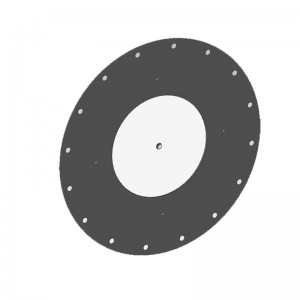
Rubber diaphragms are the most widely used type due to their excellent elasticity, wear resistance, and cost-effectiveness. Suitable for general industrial dust collection environments with normal temperature and non-corrosive compressed air, they can maintain good sealing performance under frequent cyclic operations. However, they are not recommended for high-temperature or chemical-corrosive conditions.
PTFE (Teflon) diaphragms excel in chemical resistance and high-temperature tolerance. They can withstand the erosion of strong acids, alkalis, and other corrosive substances, and maintain stability in extreme temperature environments. These diaphragms are ideal for chemical, pharmaceutical, and other industries where corrosive media are involved, though they have relatively lower elasticity compared to rubber.
Fabric-reinforced diaphragms are composed of rubber or elastomer with nylon or polyester fabric as the reinforcing layer. This structure enhances stiffness and elongation, making them suitable for high-pressure applications. They exhibit excellent durability under frequent cyclic loads, reducing the risk of deformation or rupture, and are commonly used in heavy-duty dust collection systems with high-pressure air sources.
Elastomeric diaphragms, made from high-quality materials such as nitrile or neoprene, offer superior sealing performance and flexibility. They can be molded into various shapes to fit different valve structures, making them suitable for high-precision pneumatic systems. Nitrile elastomeric diaphragms have good oil resistance, while neoprene ones perform well in ozone and aging resistance, adapting to specific harsh working conditions.