Filter bag
-
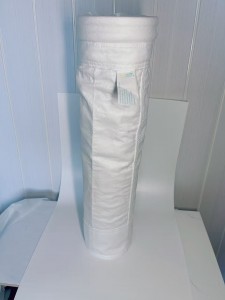
Avoidance Guide | Practical Guidelines for PTFE Filter Bag Selection, Installation and Maintenance
With normalized environmental rectification, many factories still face problems including filter bag damage, sharp pressure difference rise, shortened service life and excessive emissions after blindly replacing PTFE filter bags. Such failures rarely result from material defects, but improper selection, non-standard installation, inadequate maintenance and mixed process application. Based on front-line engineering practice, this article sorts out a complete set of schemes for PTFE filter bag classification and selection, installation risk avoidance, service life extension and cost optimization, for reference of environmental protection operation and maintenance personnel, purchasers and equipment engineers.1. Distinguish Product Types to Avoid Blind Procurement: Differences Between Three Types of PTFE Filter Bags
The PTFE filter bag market is mixed with uneven products, with a maximum price gap of 100%. The three types apply to totally different working conditions, causing frequent procurement pitfalls:1.1 All-PTFE Needle Felt Filter Bags
Woven with 100% pure PTFE fibers without mixed auxiliary materials, it boasts optimal corrosion resistance, temperature resistance and mechanical strength with the highest cost. It adapts to extreme working conditions such as municipal waste incineration and high-corrosion smelting, with a service life of 8 to 10 years. Low-cost composite products shall never be substituted, otherwise rapid damage will occur in short-term operation.1.2 Substrate Composite PTFE Filter Bags
Adopting PPS or glass fiber as the base cloth and compounding PTFE fibers on the surface, it delivers moderate cost performance, suitable for flue gas with medium corrosion and temperature below 200℃, widely used in thermal power and cement industries. Its main defect is that the bottom base cloth is prone to corrosion and fracture under high-temperature and strong-corrosion environments, so it is only applicable to production lines with stable working conditions.1.3 ePTFE Laminated PTFE Filter Bags
It is produced by laminating expanded PTFE microporous membrane on ordinary filter materials, featured with high-precision dust removal, good air permeability and easy ash cleaning, mainly used for ultra-low emission renovation. Its disadvantage is the thin and fragile membrane layer, which is easy to delaminate and damage when rubbed by sharp hard objects, so it is not recommended for working conditions with severe dust abrasion.2. Four Common Selection Misunderstandings Made by 90% of Factories
Misunderstanding 1: Only Focus on Material While Ignoring Seam Technology
PTFE cannot be sewn by hot-melt stitching; ordinary thread stitching leaves gaps with poor corrosion resistance, and seams always crack first during operation. Qualified filter bags must adopt the hot-melt welding process with seamless compression bonding to prevent dust leakage from pinholes and seam corrosion. Purchasers must verify the welding process before procurement. -
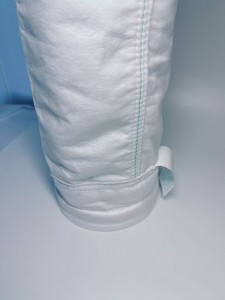
Corrosion and Temperature Resistant King of Industrial Filtration – A Comprehensive Analysis of PTFE Filter Bags
In the fields of industrial environmental protection dust removal and fluid filtration, working conditions featuring high temperature, strong acid and alkali, and high-humidity corrosion have always been major pain points for filter media. Conventional polyester, PPS and aramid filter bags are prone to aging, damage and filtration failure, resulting in excessive exhaust emissions, production line shutdowns and soaring operation and maintenance costs. Known as the “King of Plastics”, Polytetrafluoroethylene (PTFE) filter bags have become essential filtration products for harsh working conditions relying on excellent material stability. They are widely applied in flue gas dust removal, chemical water treatment and solid waste disposal, serving as the core filter material for current ultra-low emission renovation.1. Material Principle: Why Is PTFE Suitable for Extreme Working Conditions?
PTFE filter bags are made of high-purity PTFE fibers, divided into three mainstream types: integral PTFE needle felt, substrate composite PTFE and ePTFE laminated filter bags. With extremely stable chemical bonds in the molecular structure, they have four inherent properties that perfectly solve the defects of traditional filter media.First, outstanding universal temperature resistance. Virgin PTFE can stably withstand flue gas at 240℃-260℃ for a long time, with an instantaneous peak temperature resistance of 280℃. It will not shrink, harden or crack under temperature fluctuations caused by boiler startup and shutdown or kiln temperature rise; it also maintains stable performance at low temperatures, adapting to both high-temperature dust removal and low-temperature chemical fluid filtration scenarios.Second, extreme chemical corrosion resistance. PTFE features complete chemical inertness, covering the full pH range of 0 to 14. It resists erosion by hydrochloric acid, sulfuric acid, caustic soda, fluorinated materials and organic solvents. For flue gas containing hydrogen chloride, sulfide and heavy metal vapor from waste incineration, acid-base chemical filtrate and corrosive dust from non-ferrous metal smelting, PTFE can operate stably for a long time to avoid filter bag perforation and fiber pulverization caused by corrosion.Third, dust-repellent and easy ash cleaning. Boasting ultra-low surface energy, PTFE is naturally hydrophobic and oleophobic with near-zero water absorption. It will not harden and cake under high-humidity flue gas and oil-containing dust conditions. Dust only adheres to the filter bag surface instead of penetrating into fibers, and can be removed rapidly via pulse ash cleaning, reducing ash cleaning resistance by 30% and cutting fan energy consumption significantly.Fourth, controllable filtration accuracy for ultra-low emission compliance. Especially for laminated PTFE filter bags adopting surface filtration principle, they can accurately intercept ultrafine particles as small as 0.3μm, easily keeping flue gas emission concentration below 5mg/Nm³. It meets national ultra-low emission standards for thermal power and hazardous waste industries, outperforming the deep filtration mode of ordinary filter media.2. Five Core Application Scenarios Solving Industrial Pain Points
2.1 Municipal Domestic Waste and Hazardous Waste Incineration Industry
Incineration flue gas contains multiple hazards including high temperature, acid corrosion, dioxins and heavy metals, while ordinary filter bags will be scrapped due to corrosion within 3 to 6 months. PTFE filter bags can realize synchronous dust removal and trace harmful substance adsorption, with a service life of 6 to 10 years. They avoid production shutdowns caused by frequent filter bag replacement and act as the preferred filter material for environmental compliance renovation of hazardous waste disposal plants.2.2 Thermal Power and Biomass Power Generation Industry
Flue gas after desulfurization and denitrification of coal-fired and biomass boilers has complex components and sulfur-nitrogen corrosive substances, which easily damage dust removal filter bags. PTFE filter bags resist erosion of acid-base flue gas with stable operating pressure difference, applicable to dust removal systems of million-kilowatt-level power units to ensure long-term qualified emissions of power plants.2.3 Fine Chemical and Pharmaceutical Manufacturing Industry
It is mainly used for filtration of chemical acid-base mother liquor, purification of organic solvents and tail gas dust removal in pharmaceutical production. It will not precipitate harmful substances to pollute raw materials and resists swelling caused by organic solvents, balancing filtration purity and production safety for high-purity material production conditions.2.4 Non-ferrous Metal and Smelting Industry
Smelting flue gas contains fluorine and chlorine corrosive particles with strong abrasiveness. Featuring dual advantages of wear and corrosion resistance, PTFE withstands scouring and abrasion of flue gas, recovers valuable metal dust, and realizes a balance between environmental emission reduction and material profit growth.2.5 Industrial Water Treatment Industry
Applied to industrial wastewater pretreatment, precision filtration of acid-base wastewater and impurity removal of electroplating wastewater, PTFE liquid filter bags feature excellent impermeability and electroplating solution corrosion resistance, with high suspended solid interception accuracy. They can be cleaned and reused repeatedly to reduce consumable costs of water treatment systems.3. Objective Advantages and Disadvantages Analysis
Advantages: Excellent temperature and corrosion resistance, hydrophobicity and moisture resistance, long service life, high emission compliance rate and low maintenance frequency. The only disadvantage lies in high initial procurement cost. However, considering long-term operation and maintenance cost, shutdown loss and environmental penalty cost within 3-5 years, its comprehensive cost performance is far higher than low-cost filter materials. Usage Precautions: Avoid long-term contact with molten alkali metals and high-temperature elemental fluorine; it is applicable to all other industrial working conditions. -
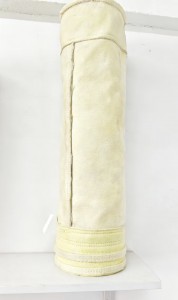
Glass Fiber Filter Bags – A Core Filter for High-Temperature and Complex Working Conditions
Glass Fiber Filter Bags – A Core Filter for High-Temperature and Complex Working Conditions
In the field of industrial dust removal and flue gas purification, glass fiber filter bags have become the core filtering medium for harsh working conditions due to their excellent high-temperature resistance and corrosion resistance. As a filtering material made of high-purity glass fiber as the base material, woven or needle-punched through special processes, it breaks the application limitations of traditional filter materials in high-temperature and corrosive environments, providing key support for environmental compliance in industries such as steel, chemical industry, and cement.The core advantages of glass fiber filter bags stem from the in-depth integration of the inherent material properties of glass fibers and process innovation. In terms of temperature resistance, their long-term service temperature can reach 260℃, and the instantaneous temperature resistance can be as high as 350℃, far exceeding conventional filter materials such as polyester and aramid. They can stably handle high-temperature flue gas without additional cooling devices, significantly reducing system energy consumption. At the same time, they possess excellent chemical stability, capable of long-term operation in acidic and alkaline environments with a pH value of 2-12, effectively resisting corrosion from harmful gases such as SO₂ and HCl in industrial flue gas. Moreover, they have no risk of electrostatic accumulation, and their Class A non-combustible property makes them suitable for explosion-proof scenarios such as flammable dust, ensuring high safety.Optimized structural design further enhances their filtering performance. The three-dimensional microporous network structure constructed by single fiber dispersion technology has a porosity of over 80%, forming gradient filtering channels. It not only achieves energy-saving operation with low initial pressure difference (≤120Pa) but also achieves a retention rate of over 99.9% for particles above 0.3μm through deep filtration mechanism. To address the inherent brittleness of glass fiber materials, the industry has improved through technologies such as PTFE membrane coating and flexible impregnation, increasing the folding resistance life of filter bags by 3-5 times, reducing dust adhesion, and extending the ash cleaning cycle. Under standard working conditions, the service life can be as long as 3-5 years.In practical applications, glass fiber filter bags have penetrated into multiple key industrial fields. In the steel industry, they are used for dry dust removal of blast furnace gas, capable of handling high-temperature flue gas with an air volume exceeding 1 million m³/h; in the alkaline dust environment at the tail of cement kilns, glass fiber filter bags treated with PTFE membrane coating can effectively resist erosion from CaO and MgO, maintaining stable filtering efficiency up to standard; in the field of waste incineration and hazardous waste treatment, their high-temperature and corrosion resistance can cope with flue gas temperatures of 180-260℃, while efficiently capturing pollutants such as dioxins and heavy metals, making the emission concentration meet strict EU standards. In addition, in high-temperature, high-humidity or highly corrosive working conditions such as biomass power generation and chlor-alkali chemical industry, glass fiber filter bags also demonstrate irreplaceable value through precise adaptability to working conditions.Scientific selection and maintenance are crucial to exerting the performance of glass fiber filter bags. During selection, the type of filter material should be matched according to flue gas temperature and corrosive component concentration; for example, caution should be exercised when the concentration of Cl⁻ and SO₃ is high. Pre-coating with Ca(OH)₂ should be carried out in the initial operation stage, and the injection pressure should be controlled at 0.2-0.3MPa to avoid fiber damage caused by high-pressure impact. Detecting the integrity of filter bags every 6 months through differential pressure method or fluorescent penetrant inspection can significantly extend their service life and maximize technical and economic benefits. -
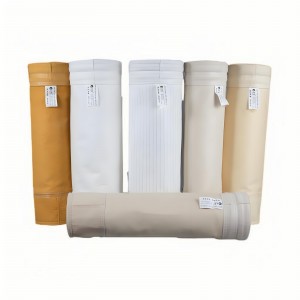
Polyester Filter Bags: The Benchmark in Industrial Filtration
In the filtration processes of industrial production and environmental protection, polyester filter bags, with their outstanding comprehensive performance, have become one of the most widely used filtration materials. As a filtration product made from polyester fibers (polyester), it not only possesses stable physical and chemical properties but also can meet the filtration requirements of various industries and media, providing a core guarantee for improving production efficiency and achieving pollutant compliance emissions.
The core advantages of polyester filter bags stem from the superior characteristics of the raw materials. Polyester fibers have high strength and excellent wear resistance, with a breaking strength of 5-7 cN/dtex, capable of withstanding the high-pressure airflow impact and dust friction in industrial filtration, and extending the service life by 30%-50% compared to ordinary filtration materials. At the same time, polyester has good thermal stability, with a continuous working temperature of up to 130°C and a momentary temperature resistance of 150°C, which can meet the temperature requirements of most industrial conditions, avoiding filter deformation or failure due to high temperatures. In terms of chemical stability, polyester has good tolerance to acids, alkalis, and organic solvents, requiring special treatment only in strongly alkaline environments, enabling it to handle complex media filtration in industries such as chemical, metallurgy, and construction.
From the structural design perspective, polyester filter bags are processed through various techniques such as needle punching, hot rolling, and coating, to meet different filtration accuracy requirements. Needle-punched polyester filter bags, with their three-dimensional structure, have a porosity of over 70%, capable of efficiently trapping dust particles, with a filtration accuracy of 1-5 μm; coated polyester filter bags have a layer of PTFE film on the base fabric, using the micro-porous structure of the film to achieve “surface filtration”, not only increasing the filtration efficiency to over 99.9%, but also effectively preventing dust from adhering to the filter, reducing the frequency of cleaning and energy consumption. Additionally, according to different application scenarios, polyester filter bags can be customized in various shapes such as circular, elliptical, and rhombic, suitable for various equipment such as pulse bag-type dust collectors and bag-type dust collectors, with convenient installation and excellent sealing performance.
In the current era of increasingly strict environmental protection trends, the environmental value of polyester filter bags is also prominent. Polyester materials can be recycled and reused, conforming to the concept of circular economy; its efficient filtration performance can effectively control the concentration of dust emissions, helping enterprises meet national environmental protection emission standards and reducing air pollution. Whether it is smoke dust removal in the thermal power industry, raw material crushing filtration in the cement industry, or tail gas purification in the chemical industry, polyester filter bags can, with stable performance, longer service life, and higher cost-effectiveness, become the ideal choice in the field of industrial filtration.
-
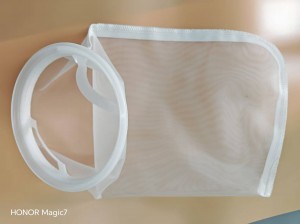
The application of liquid filter bags in the pharmaceutical industry
In the pharmaceutical industry, the safety, purity, and stability of drugs are directly related to patients’ lives and health. As a core link in the entire pharmaceutical production process, liquid filtration undertakes the important mission of removing impurities, microorganisms, and particulate contaminants. Liquid filter bags have become an indispensable key equipment in liquid processing scenarios of the pharmaceutical industry due to their high filtration precision, stable chemical compatibility, ease of replacement, and compliance with the strict standards of Good Manufacturing Practice (GMP). Starting from the special filtration requirements of the pharmaceutical industry, this article systematically sorts out the core application scenarios, selection key points, and technological development trends of liquid filter bags, providing comprehensive application references for industry practitioners.
I. Core Requirements for Liquid Filtration in the Pharmaceutical Industry: Equal Emphasis on High Purity and CompliancePharmaceutical production involves multiple links such as active pharmaceutical ingredient (API) synthesis, preparation manufacturing, injection preparation, and process water treatment. The liquid systems (such as liquid medicines, solvents, buffers, and process water) in each link must meet extremely high purity requirements, which put forward three core demands for filtration equipment:- Absolute Safety: Filter materials must not undergo chemical reactions with liquid medicines or release extractables (such as heavy metals and organic impurities). At the same time, they must be sterilizable (e.g., withstanding 121°C moist heat sterilization or γ-ray sterilization) to avoid introducing secondary pollution;
- Precise Filtration Precision: According to different drug types (such as oral preparations, injections, and biological products), precise filtration from the micrometer level (e.g., 1-20μm) to the sub-micrometer level (e.g., 0.22μm) must be achieved. Among them, 0.22μm filtration is regarded as a key standard for “sterile filtration”, which can effectively retain microorganisms such as bacteria and fungi;
- Strict Compliance: The production process of filter bags must comply with GMP standards and have a complete quality traceability system (such as material certification and batch test reports). At the same time, they must meet the requirements of international regulatory authorities such as the U.S. Food and Drug Administration (FDA) and the European Medicines Agency (EMA) to ensure that drugs can pass the compliance review of the global market.
By using inert polymer materials such as polypropylene (PP), polyester (PE), and polytetrafluoroethylene (PTFE), combined with processes like hot-melt welding and silicone-free sealing, liquid filter bags can fully meet the above requirements and become one of the preferred solutions for liquid filtration in the pharmaceutical industry. -
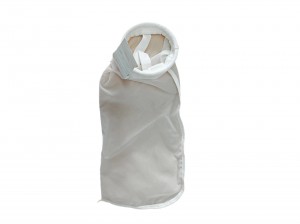
The application of liquid filter bags
In the intensive processing link of food and beverage production, the application of liquid filter bags is more segmented, requiring precise matching of filtration precision and material according to specific process requirements. Taking beer brewing as an example, the fermented beer contains impurities such as yeast cells and protein precipitates. Direct filling without filtration will cause turbidity and sediment in the beer, affecting its shelf life and drinking experience. At this point, the use of beer-specific filter bags (usually polypropylene membrane filter bags with a precision of 1-5 microns) can efficiently remove suspended impurities without damaging the flavor substances of the beer, maintaining the stable clarity of the beer and extending its shelf life.
The application of liquid filter bags is also crucial in dairy production. For instance, in the pretreatment of raw milk before yogurt fermentation, filtration is required to remove mechanical impurities and whey protein clots from the raw milk, preventing these impurities from affecting the activity of fermentation strains and the texture of the yogurt. At this stage, the selection of sanitary-grade polypropylene filter bags (equipped with food-grade sealing rings and complying with 3-A Sanitary Standards) not only achieves efficient filtration but also meets the strict requirements of dairy production for equipment cleanliness, preventing cross-contamination.Filtration Before Finished Product Filling: The “Final Check” for QualityEven after multiple processing steps, trace impurities may still be introduced into food and beverages before the filling process due to factors such as pipeline wear and environmental dust. If these impurities enter the finished products, they will not only affect the consumers’ drinking experience but also trigger product complaints and brand trust crises. Therefore, “terminal filtration” before finished product filling is of vital importance, and liquid filter bags are the core equipment in this link.Taking bottled drinking water production as an example, the terminal filtration before filling usually uses sterile filter bags with a precision of 0.22-1 micron (such as polytetrafluoroethylene (PTFE) membrane filter bags). These filter bags can not only trap bacteria, microorganisms, and tiny particles in the water but also have sterilization resistance (such as steam sterilization and chemical sterilization), ensuring that the filled drinking water meets the requirements of the national standard GB 19298 “National Food Safety Standard for Packaged Drinking Water”. In the production of carbonated beverages, the terminal filtration requires the use of pressure-resistant and carbonic acid corrosion-resistant filter bags (such as polyester membrane filter bags) to prevent the filter bags from breaking due to the pressure of carbon dioxide gas, while ensuring that the filtered beverages are free of impurities and have a smooth taste.Core Points for Selecting Liquid Filter Bags in the Food and Beverage Industry- Material Compliance: Prioritize filter bags that comply with food contact material standards (such as FDA, EU 10/2011, and GB 4806) to prevent harmful substances in the material from migrating into food and beverages;
- Precision Adaptability: Select the appropriate filtration precision based on the characteristics of impurities in different process links (e.g., 20-50 microns for raw material pretreatment and 0.22-5 microns for terminal filtration). Avoid excessively high precision, which may lead to reduced filtration efficiency and increased costs, or excessively low precision, which cannot meet the filtration requirements;
- Hygienic Safety: For scenarios with extremely high hygiene requirements, such as dairy products and sterile beverages, sanitary-grade filter bags should be selected. These filter bags are equipped with food-grade sealing rings, and their surfaces are smooth and free of dead corners, facilitating cleaning and sterilization;
- High-Temperature and Corrosion Resistance: Choose filter bag materials with high-temperature and corrosion resistance according to the temperature (e.g., high-temperature fruit juice after pasteurization) and acidity/alkalinity (e.g., acidic beverages and alkaline syrups) of the liquid during the production process to prevent the filter bags from being damaged or degraded during use.
In conclusion, liquid filter bags in the food and beverage industry are not only “interceptors” of impurities but also “guardians” of quality. With the continuous improvement of consumers’ requirements for food and beverage safety and quality, and the continuous upgrading of industrial production processes, liquid filter bags will develop in the direction of higher efficiency, better compliance, and more customization, providing a more solid guarantee for the healthy development of the food and beverage industry. -
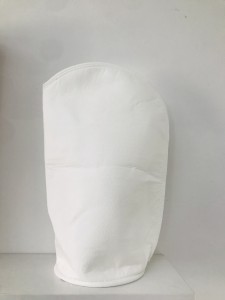
Key Applications of Liquid Filter Bags in the Food and Beverage Industry
In the food and beverage industry, “safety” and “quality” are core keywords throughout the entire production process. Liquid filtration, as a crucial link in the production chain, directly determines the purity and taste of the final products. Liquid filter bags, with their high-efficiency filtration performance, compliant material selection, and flexible adaptability, have become indispensable filtration equipment in this industry. From raw material processing to finished product filling, they provide protection for every drop of beverage and every portion of food.1. Raw Material Pretreatment: Blocking Impurity Contamination from the SourceThe starting point of food and beverage production often involves various liquid raw materials, such as drinking water, fruit juice concentrate, syrup, and brewing liquor. These raw materials may contain impurities that are invisible to the naked eye—sand and sediment in water, microbial residues, pulp debris and pectin particles in fruit juice, and crystalline impurities in syrup. If not filtered in a timely manner, these impurities will not only affect the taste of the products but also clog subsequent production equipment (such as pipelines, pumps, and filling valves), and even pose a risk of microbial growth.Liquid filter bags play the role of the “first line of defense” in this process. Based on the characteristics of different raw materials, the industry usually adopts food-grade polypropylene (PP) filter bags or polyester (PET) filter bags. These materials not only comply with international food contact material standards such as FDA (U.S. Food and Drug Administration) and EU 10/2011 but also possess acid and alkali resistance and high-temperature resistance (some models can withstand temperatures above 120°C). They are suitable for scenarios such as filtration of fruit juice before pasteurization and clarification of syrup after heating and dissolution. For example, in fruit juice production, the use of filter bags with a precision of 5-20 microns can effectively trap pulp fibers and colloidal particles, giving the fruit juice a clear and transparent appearance. At the same time, it prevents impurities from adhering to the tube wall of the evaporator in the subsequent concentration process, thereby improving the heat exchange efficiency of the equipment.2. Production Process Purification: Ensuring Process Stability and Product ConsistencyIn the intensive processing link of food and beverage production, the application of liquid filter bags is more segmented, requiring precise matching of filtration precision and material according to specific process requirements. Taking beer brewing as an example, the fermented beer contains impurities such as yeast cells and protein precipitates. Direct filling without filtration will cause turbidity and sediment in the beer, affecting its shelf life and drinking experience. At this point, the use of beer-specific filter bags (usually polypropylene membrane filter bags with a precision of 1-5 microns) can efficiently remove suspended impurities without damaging the flavor substances of the beer, maintaining the stable clarity of the beer and extending its shelf life.The application of liquid filter bags is also crucial in dairy production. For instance, in the pretreatment of raw milk before yogurt fermentation, filtration is required to remove mechanical impurities and whey protein clots from the raw milk, preventing these impurities from affecting the activity of fermentation strains and the texture of the yogurt. At this stage, the selection of sanitary-grade polypropylene filter bags (equipped with food-grade sealing rings and complying with 3-A Sanitary Standards) not only achieves efficient filtration but also meets the strict requirements of dairy production for equipment cleanliness, preventing cross-contamination. -
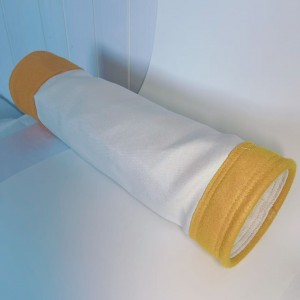
Glass Fiber Filter Bags: Technological Innovation Drives Industry Development
In this era of increasing environmental awareness, the control of dust pollution in industrial production processes has become a focus of attention for major enterprises. As an efficient dust removal device, glass fiber filter bags have unique performance advantages and occupy an important position in the field of industrial dust removal. With the continuous advancement of technology, the production technology of glass fiber filter bags is also constantly innovating, bringing new opportunities and challenges to its market development.
From a technical perspective, the production process of fiberglass filter bags has been continuously optimized. The traditional production of fiberglass filter bags mainly adopts the glass fiber needle-punched felt process. After cutting the glass fibers and conducting needle-punching to form the felt, a series of post-processing procedures are carried out to produce the filter bags. Although this process can meet basic filtration requirements, it still has certain limitations in terms of filtration accuracy, air permeability, and durability. In recent years, with the application of new materials and technologies, significant breakthroughs have been made in the production process of fiberglass filter bags. For example, using fiberglass expanded yarn as the raw material, a high-density thick-type fiberglass fabric is woven through a special weaving process. Compared with the traditional needle-punched felt, this fiberglass fabric has higher strength and better wear resistance, which can effectively extend the service life of the filter bags. At the same time, in terms of surface treatment technology, new progress has also been made. Through heat setting, pressure bonding, and treatment with waterproof agents such as PTFE (polytetrafluoroethylene) on the surface of the fiberglass fabric, a dense protective film is formed on the surface of the filter bag. This not only improves the waterproof and oil-resistant performance of the filter bag but also enhances its resistance to chemical corrosion, enabling it to better adapt to complex and variable industrial environments.
In addition to the improvement of production processes, the design of glass fiber filter bags has also been innovated. To enhance the filtration efficiency and reduce the operating resistance, some manufacturers have developed glass fiber filter bags with a gradient filtration structure. These filter bags are composed of multiple layers of glass fiber materials with different pore sizes. From the inlet to the outlet, the pore sizes gradually decrease. When the dusty gas passes through the filter bag, large particles of dust are first intercepted by the outer layer of larger pore size glass fiber materials, while small particles of dust are captured by the inner layer of smaller pore size materials. This gradient filtration structure can fully utilize the filtering advantages of different pore size glass fiber materials, achieve efficient filtration of dust of different particle sizes, reduce the accumulation of dust inside the filter bag, lower the operating resistance, and improve the cleaning effect. Moreover, some manufacturers have further enhanced the sealing performance and installation convenience of the filter bags by optimizing the sewing process and bag mouth design, thereby improving the overall performance of the products.
In terms of market application, glass fiber filter bags, due to their outstanding performance, are widely used in numerous industrial sectors. In the steel industry, during the steel smelting process, a large amount of hot and highly dusty exhaust gas is produced, which contains various metal oxides and impurities. Glass fiber filter bags can operate stably in high-temperature environments, effectively filtering the dust in this exhaust gas, ensuring compliance with emission standards, and recovering valuable metal dust to achieve resource recycling. In the cement industry, the kiln heads and kiln tails, as well as the raw material grinding and cement grinding processes, all generate a large amount of dust. Glass fiber filter bags, with their characteristics of high-temperature resistance, corrosion resistance, and high-precision filtration, have become the preferred equipment for controlling dust pollution in the cement industry, ensuring the environmental protection and sustainability of cement production. In the power industry, the flue gas produced by coal-fired boilers contains a large amount of fly ash and other particulates. Using glass fiber filter bags to filter this flue gas can significantly reduce dust emissions, reduce air pollution, and protect the normal operation of power generation equipment, thereby improving power generation efficiency. In addition, glass fiber filter bags have also been widely used in industries such as chemicals, ceramics, glass manufacturing, and waste incineration, providing effective solutions for dust pollution control in various industries.
With the increasingly strict environmental policies and the growing demand for environmental-friendly products in the market, the fiberglass filter bag market is showing a favorable development trend. On one hand, the configuration requirements for environmental protection equipment in newly-built industrial projects are constantly increasing, which prompts enterprises to increase their purchase of efficient dust removal equipment such as fiberglass filter bags. On the other hand, existing enterprises, in order to meet the increasingly strict environmental emission standards, also upgrade and replace their original dust removal equipment one after another, which brings a huge demand for renewal and upgrading in the fiberglass filter bag market. According to market research institutions’ predictions, in the coming years, the global market size of fiberglass filter bags will maintain stable growth, especially in emerging economy countries, as the industrialization process accelerates and environmental awareness improves, the prospects of the fiberglass filter bag market are broad.
However, the competition in the market has become increasingly fierce. With the growing demand for fiberglass filter bags, more and more enterprises have entered this field, making the competition even more intense. Each enterprise, in order to gain a foothold in the market, has increased investment in technological research and development, improved product quality and performance, reduced production costs, and strengthened brand building and market promotion. In this market environment, some enterprises with weaker technical capabilities and unstable product quality will face the risk of being eliminated. Therefore, for fiberglass filter bag manufacturing enterprises, how to stand out in the fierce market competition lies in continuous innovation, continuously enhancing the technical content and added value of products to meet the increasingly diverse needs of customers.
Looking ahead, with the continuous advancement of technology and the further improvement of environmental protection requirements, the fiberglass filter bag industry will embrace more development opportunities. On one hand, the continuous emergence of new technologies and materials will provide a broader space for the technological innovation of fiberglass filter bags. For instance, the application of nanotechnology and intelligent materials is expected to further enhance the performance of fiberglass filter bags, enabling new breakthroughs in aspects such as filtration accuracy, self-cleaning ability, and service life. On the other hand, as global attention to sustainable development continues to increase, green and environmentally friendly fiberglass filter bags will become the mainstream development direction in the market. Enterprises need to strengthen the research and application of environmentally friendly production processes, reduce energy consumption and pollutant emissions during the production process, and pay attention to the recyclability of products to achieve a win-win situation of economic benefits and environmental benefits.
The fiberglass filter bag, as an important equipment in the field of industrial dust removal, has a broad market prospect driven by technological innovation. However, at the same time, enterprises also need to face fierce market competition and constantly changing market demands. By continuously innovating and optimizing product performance, they can establish a foothold in the market and achieve long-term development. It is believed that with the joint efforts of all parties in the industry, the fiberglass filter bag will play a more important role in future industrial production and environmental protection. -
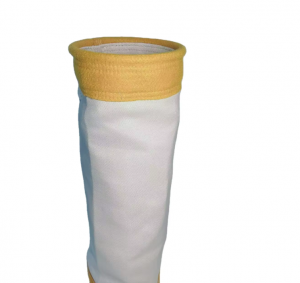
Fiberglass Filter Bags: The Backbone of Industrial Dust Removal
In the process of industrial production, dust pollution has always been a serious problem that needs to be solved urgently. It not only causes damage to the environment and affects air quality but also may pose a threat to the health of workers. To effectively address this challenge, various dust removal equipment and technologies have emerged, among which fiberglass filter bags play a pivotal role and can be called the backbone of industrial dust removal.
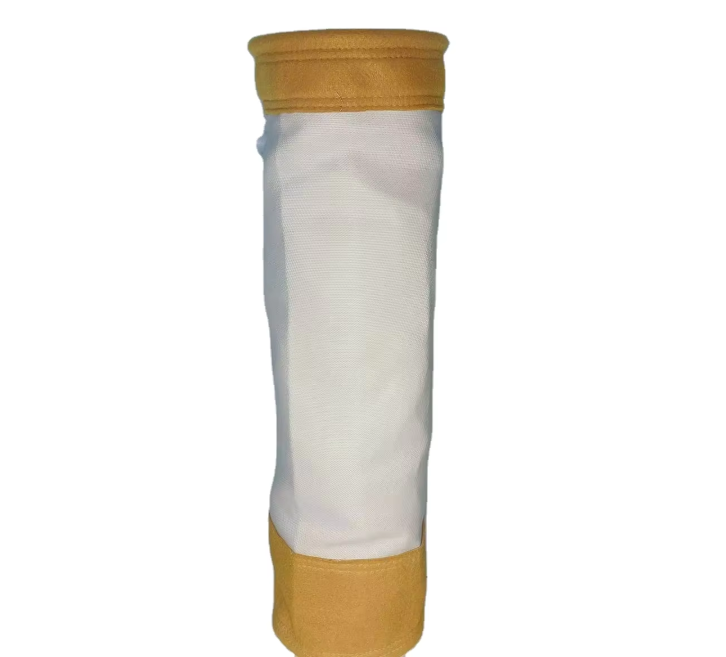 As the name suggests, fiberglass filter bags are filtering devices made mainly from glass fibers. Glass fibers have many excellent properties, laying a solid foundation for the high-performance of fiberglass filter bags. Firstly, glass fibers have excellent high-temperature resistance. In many industrial production scenarios, such as iron and steel smelting, cement manufacturing, and coal-fired power generation, a large amount of high-temperature flue gas is generated. Ordinary filtering materials may age, deform, or even lose their filtering function quickly in high-temperature environments, while fiberglass filter bags can operate stably for a long time at temperatures up to 260°C, and the instantaneous temperature resistance peak of some special models of fiberglass filter bags can even reach 300°C. This enables it to perfectly adapt to these high-temperature working conditions, ensuring efficient dust filtering under harsh temperature conditions, and guaranteeing the continuity of the production process and environmental protection requirements.Secondly, fiberglass filter bags have excellent chemical stability. Industrial waste gas has complex components and often contains various corrosive substances such as acids and alkalis. Glass fibers themselves are inert to most chemical substances and are not easy to react with these corrosive media. This characteristic allows fiberglass filter bags to maintain structural integrity and stable filtering performance when facing waste gas containing a large amount of corrosive gases generated in industries such as chemical industry and waste incineration. They will not cause filter bag damage or leakage due to chemical corrosion, thus ensuring the long-term stable operation of the dust removal system and reducing equipment maintenance costs and the frequency of filter bag replacement.Furthermore, fiberglass filter bags perform extremely well in terms of filtration precision. Their unique fiber structure forms fine filtering pores, which can effectively intercept dust particles of various particle sizes. Especially for inhalable particles that are extremely harmful to human health (such as PM10 and PM2.5), fiberglass filter bags can achieve efficient capture, stably controlling the emission concentration at an extremely low level. Some high-quality fiberglass filter bags can even reduce the emission concentration to below 10mg/m³, and in some working conditions, it can even reach 5mg/m³, fully meeting the increasingly strict environmental protection emission standards and providing a strong guarantee for enterprises to achieve green production.In addition to the above performance advantages, fiberglass filter bags also have good mechanical strength and wear resistance. In actual use, filter bags need to withstand the scouring of air flow, the friction of dust, and the mechanical force during the ash cleaning process. With its high tensile strength, fiberglass filter bags can maintain stable shape under these complex mechanical stresses, are not easy to break or damage, and thus have a long service life. This not only reduces the number of filter bag replacements, lowers the operating costs of enterprises but also improves the reliability and stability of the dust removal system, reducing the risk of production interruption caused by equipment failures.In various fields of industrial production, fiberglass filter bags play an indispensable role. In the iron and steel industry, a large amount of high-temperature flue gas containing pollutants such as metal oxides and dust is generated in various links from iron ore sintering, ironmaking to steelmaking. Fiberglass filter bags can effectively filter impurities in these flue gases in high-temperature environments, ensuring that emissions meet standards, and at the same time, recovering valuable metal dust to realize the recycling of resources. In the cement industry, the waste gas emitted from the head and tail of cement kilns has high temperature, high dust concentration, and complex components. Relying on its characteristics of high-temperature resistance, corrosion resistance, and high-precision filtration, fiberglass filter bags have become key equipment for controlling dust pollution in the cement production process, ensuring the environmental protection and sustainability of cement production. In the power industry, the flue gas generated by the combustion of coal-fired boilers contains a large amount of fly ash and other particles. Using fiberglass filter bags to filter these flue gases can significantly reduce dust emissions, reduce pollution to the atmospheric environment, and at the same time protect the normal operation of power generation equipment and improve power generation efficiency.In addition, fiberglass filter bags are also widely used in many industries such as chemical industry, ceramics, and glass manufacturing. In whatever industrial scenario, it solves the problem of dust pollution for enterprises with its excellent performance, helps enterprises realize clean production, and makes important contributions to environmental protection and sustainable development.With the increasingly strict environmental protection requirements and the continuous progress of industrial technology, fiberglass filter bags are also continuously innovating and developing. On the one hand, researchers are constantly exploring new production processes and material formulas to further improve the performance of fiberglass filter bags. For example, by improving the drawing process of glass fibers, the fibers become more uniform and delicate, thereby improving the filtration precision and air permeability of the filter bags; adopting new surface treatment technologies to enhance the waterproof and oil-proof performance of the filter bags, enabling them to better adapt to humid and oily industrial environments. On the other hand, to meet the special needs of different industries, fiberglass filter bags are also developing in the direction of diversification and personalization. For some application scenarios with special requirements for the size and shape of filter bags, manufacturers can provide customized services to produce filter bag products that meet customer needs.In conclusion, as one of the core equipment in the field of industrial dust removal, fiberglass filter bags have been widely used in many industrial industries and play an irreplaceable role with their advantages such as excellent high-temperature resistance, corrosion resistance, high-precision filtration, and good mechanical properties. With the continuous innovation and development of technology, it is believed that fiberglass filter bags will continue to play an important role in industrial production and environmental protection in the future, contributing more to the realization of green and sustainable development goals.
 -
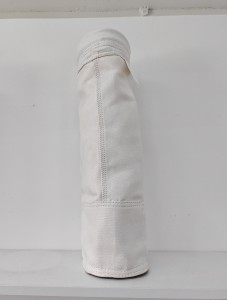
Glass fiber filter bag: Multi-layer composite structure helps achieve efficient filtration
Modern medium-efficiency bag filters made of glass fiber usually adopt a carefully designed multi-layer composite structure. Each layer of material plays a unique role, jointly ensuring efficient filtration and long-term use.
(1) Base layer: The core of filtration
The base layer is made of non-woven fabric formed by needle-punching fine-diameter glass fibers. It is the main part of the filtration. The fineness, porosity and thickness of the fibers in this layer have a direct impact on the filtration accuracy and dust holding capacity. The thickness of high-quality glass fiber needle-punched felt is generally controlled at 1.8 – 2.5mm, and the air permeability is between 80 – 120L/m²·s. Fine-diameter glass fibers formed by needle-punching form a three-dimensional network structure, which can effectively intercept most particulate matter. The finer fiber diameter helps to improve the capture efficiency of fine particulate matter, but it will correspondingly increase the initial resistance. Therefore, in practical applications, the fiber diameter and other parameters need to be optimized according to the dust characteristics and system air volume to achieve the best filtration effect.
(2) Reinforcement layer: Enhancing strength and stability
The reinforcement layer usually uses high-strength glass fiber mesh fabric or polyester base fabric, with a weight of 80 – 120g/m². It is usually placed between or on one side of the base layer. The existence of this layer significantly enhances the tensile strength and dimensional stability of the filter material. Relevant test data show that adding the reinforcement layer can increase the breaking strength of the filter material by 50% – 80%. In industrial dust removal systems, pulse cleaning is a common cleaning method, and the filter bags need to withstand the mechanical stress of the pulse airflow. The addition of the reinforcement layer enables the filter bags to better resist such mechanical stress, effectively preventing the bags from cracking, deforming, etc. during cleaning, and prolonging the service life of the filter bags, ensuring the normal operation of the dust removal system.
(3) Surface treatment layer: Improving surface properties
The surface treatment layer applies chemical agents such as PTFE or silicone oil by immersion or spraying to improve the surface properties of the filter material. The common addition amount of the treatment agent is 5% – 15% of the filter material weight. After treatment, the water repellency angle of the filter material can reach above 130°, and the dust shedding rate increases by 30% – 50%. Glass fibers have the disadvantages of high brittleness and poor bending resistance. The surface treatment technology effectively solves these problems. For example, PTFE immersion treatment can make the polytetrafluoroethylene emulsion penetrate the surface of the fibers, forming a micrometer-level coating, which not only significantly improves the flexibility and chemical stability of the filter material, but also raises the usage temperature of the filter material to 280℃, while reducing the surface energy and making the dust accumulation easier to remove; silicone oil treatment can also improve the surface properties of the filter material to some extent, enhancing its anti-fouling ability.
-
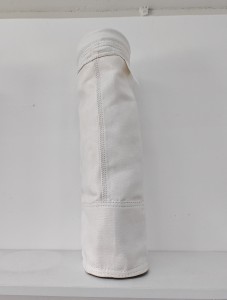
Glass fiber filter bags: The backbone of industrial dust removal
Among the numerous stages in industrial production, dust pollution has always been a pressing issue that needs to be addressed urgently. From the kilns in cement manufacturing to the blast furnaces in steel smelting, a large amount of dust is discharged along with the exhaust gas, causing severe pollution to the environment and posing a threat to the health of workers. In this battle against dust, fiberglass filter bags, with their outstanding performance, have become a pillar in the field of industrial dust removal.
Foundation laid by superior performance
The main material of fiberglass filter bags is glass fiber, which endows the filter bags with many excellent characteristics.(1) Outstanding high-temperature resistance
The softening point of glass fiber is as high as 550℃, and its strength retention rate exceeds 90% even when used for a long time at 260℃. Through thermogravimetric analysis (TGA), it can be seen that glass fiber shows no significant quality loss before 500℃, while polyester fiber begins to decompose at around 250℃. This characteristic enables fiberglass filter bags to easily handle high-temperature smoke gas of up to 260℃ in industries such as steel and cement, operating stably in high-temperature environments and continuously exerting filtering effects without deformation or damage due to excessive temperature, thus ensuring the continuity of industrial production.
(2) Strong chemical inertness, corrosion resistance
Glass fiber is resistant to acid and alkali corrosion within the pH range of 2 – 11. It maintains good stability in acidic gas environments such as SOx and NOx. Relevant experiments show that after exposing the fiberglass filter material to 50% sulfuric acid mist for 48 hours, its strength retention rate remains above 85%, while polypropylene fiber has completely degraded at this time. This strong corrosion resistance makes fiberglass filter bags an ideal choice for industries with corrosive environments such as chemical and metallurgical industries. Even in harsh working conditions filled with various corrosive gases and chemicals, they can operate stably for a long time, effectively filtering dust, extending their service life, and reducing the cost of replacing filter bags for enterprises.
(3) Excellent electrical performance, anti-static
The volume resistivity of glass fiber is between 10¹² – 10¹⁴Ω·cm, effectively preventing static electricity accumulation. In industrial production, many dusts such as coal dust and aluminum powder are flammable and explosive. If the filter bag cannot effectively prevent static electricity, the resulting static sparks are likely to trigger explosion accidents. In contrast, the volume resistivity of polyester fiber is approximately 10⁹Ω·cm, more prone to generating static electricity. The anti-static characteristic of fiberglass filter bags provides safety guarantees for industrial production in flammable and explosive dust environments, significantly reducing safety risks.
(4) Deep filtration, high dust retention capacity
Fiberglass filter bags mainly rely on mechanical interception and diffusion deposition effects of the fiber mesh for deep filtration. Unlike coated filter materials that mainly perform surface filtration, fiberglass needle-punched felt has a higher dust retention capacity and a gentler resistance growth curve. In actual industrial applications, dust concentrations often fluctuate, and fiberglass filter bags can maintain stable filtering performance under fluctuating dust concentrations in such conditions, without a significant drop in filtration efficiency or a sharp increase in resistance due to short-term increases in dust volume, ensuring the stable operation of the dust removal system.
-
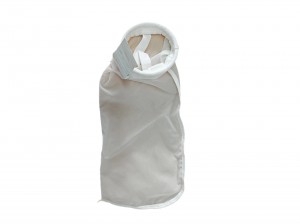
Nylon Water Filter Bag: Unmatched Performance Opens a New Era of Filtration
In today’s era of evolving water filtration technology, the nylon water filter bag stands out with its unique advantages, becoming the ideal choice for many industries to achieve efficient water filtration.
Nylon, as the core material for making filter bags, possesses numerous excellent properties. The high strength of nylon ensures that the filter bags have excellent mechanical performance, enabling them to withstand significant water pressure without being damaged. Additionally, its wear resistance, chemical resistance, and water resistance are all outstanding. When dealing with complex water quality environments, such as industrial wastewater containing acidic or alkaline substances, nylon water filter bags can perform stable filtration work thanks to their chemical corrosion resistance, without being affected by chemical substances and thus not shortening their service life.
The filtration accuracy range of nylon water filter bags is quite wide, typically ranging from 20 microns to 1000 microns. This diverse range of accuracy options meets the needs of different industries and different filtration stages. In some occasions where water quality requirements are relatively low, such as the pre-treatment of industrial wastewater, larger precision nylon water filter bags can quickly and effectively intercept large particles of impurities, such as sand and large suspended solids, laying the foundation for subsequent more precise treatment steps. In fields with extremely high water quality requirements, such as ultra-pure water production in the electronics industry and sterile water production in the pharmaceutical industry, smaller precision nylon water filter bags can precisely filter out microorganisms, bacteria, tiny particles, and colloids, ensuring that the produced water meets strict standards.
From the perspective of manufacturing process, nylon water filtration bags are usually made by precisely weaving nylon single filaments and processing them with special auxiliary materials. The weaving structure is tight and uniform, ensuring the stability and consistency of the filtration bag during the filtration process. Moreover, the surface of the nylon single filaments is smooth, which not only enables the liquid to pass through the filtration bag smoothly, improving the filtration efficiency, but also makes the impurities intercepted not easily adhere to the surface of the filtration bag. When cleaning is needed, the impurities can easily fall off, greatly enhancing the convenience of cleaning, and thus enabling the filtration bag to be reused multiple times, reducing the long-term usage cost.
In terms of practical application, nylon water filtration bags play a significant role in various industries. In the food and beverage sector, they are involved in the production of juices, edible oils, and wine. In juice production, they remove larger particles such as pulp during the coarse filtration stage, ensuring the smooth progress of the production process. Subsequently, in the fine filtration stage, they can also filter out small gelatinous particles, thereby improving the quality and taste of the juice. In the wine-making process, after initially filtering out impurities such as wine residue, nylon water filtration bags can further filter before bottling to prevent microbial contamination and extend the shelf life of the wine.