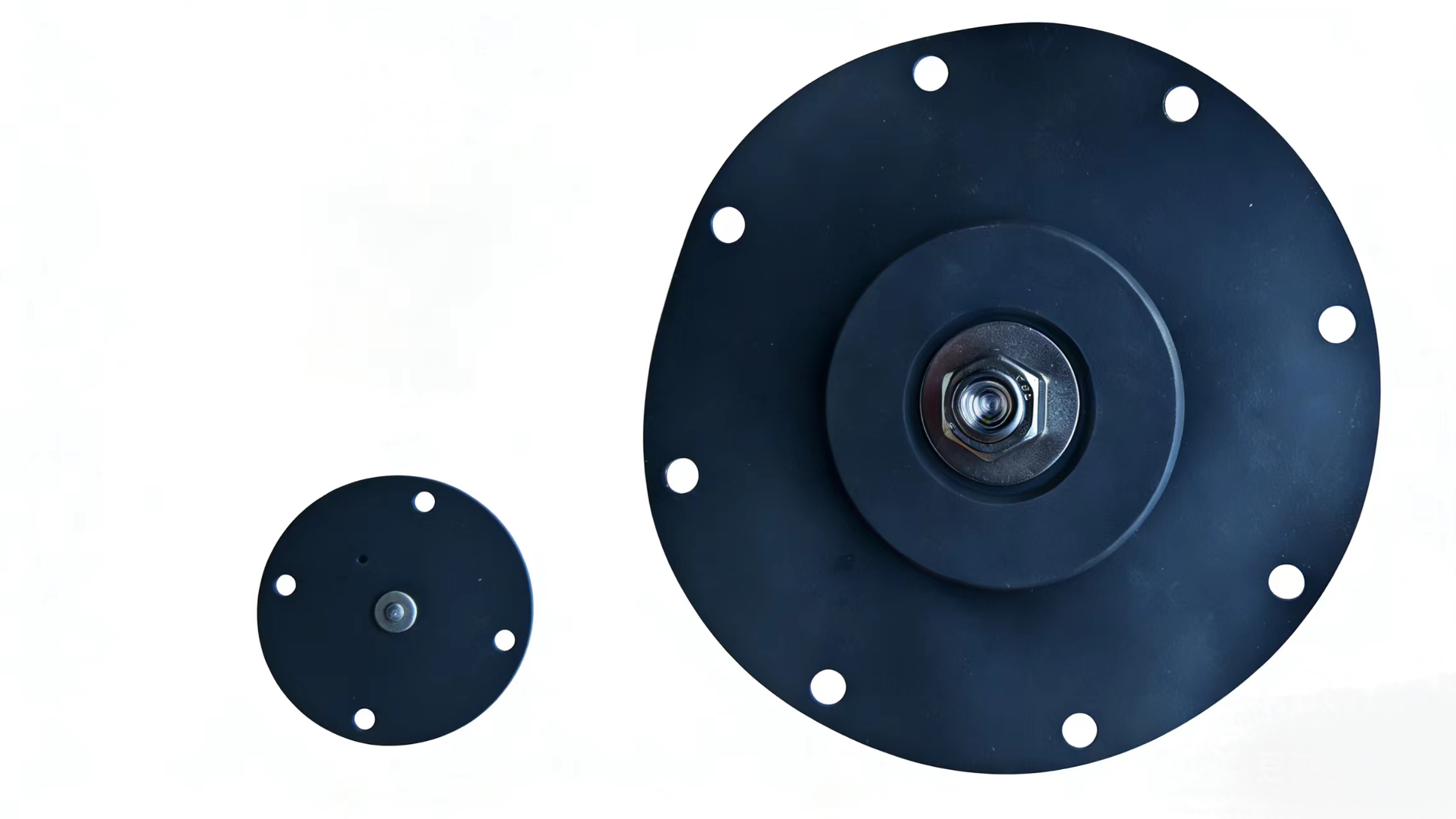
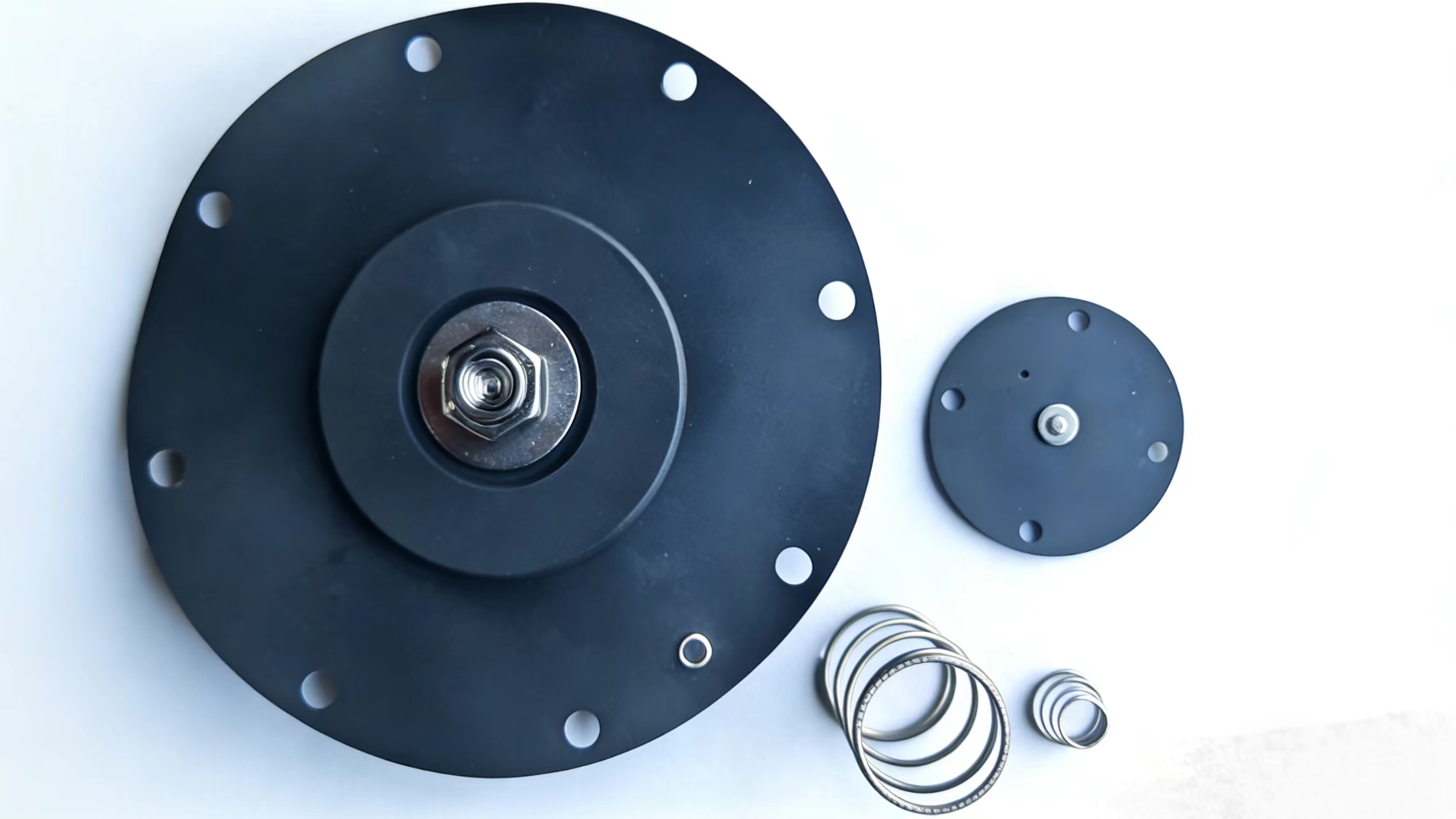
Pulse valve diaphragms are vulnerable components in dust collection systems, and their service life is affected by material selection, working conditions, and maintenance practices. Proper selection and regular maintenance can significantly extend the diaphragm’s lifespan, reduce downtime, and lower operating costs. This article provides a comprehensive guide to diaphragm selection and maintenance.
Key Factors for Diaphragm Selection
The selection of pulse valve diaphragms should be based on actual working conditions, focusing on the following four core factors:
Material compatibility is the primary consideration. It is necessary to ensure that the diaphragm material is compatible with the working medium (compressed air, dust, or other gases) and the surrounding environment. For example, in chemical plants with corrosive gases, PTFE diaphragms should be selected; for general dust collection systems, rubber diaphragms can meet the requirements. In oil-containing compressed air environments, nitrile elastomeric diaphragms with oil resistance are preferred.
Temperature range is another critical factor. Diaphragm materials have specific temperature tolerance limits, and exceeding this range will accelerate material degradation, leading to premature cracking or hardening. For high-temperature environments such as metallurgical or cement plants, high-temperature resistant materials like PTFE or special rubber should be used; for normal temperature environments, ordinary rubber diaphragms are sufficient. It is recommended to reference the manufacturer’s specifications to ensure temperature compatibility.
Application pressure must match the diaphragm’s design pressure. Exceeding the maximum pressure rating will cause diaphragm rupture, while insufficient pressure may affect sealing performance. Fabric-reinforced diaphragms are suitable for high-pressure systems (above 0.6MPa), while ordinary rubber diaphragms are applicable for medium and low-pressure systems (0.3-0.6MPa). It is essential to confirm the system pressure before selection.
Flexibility and endurance are crucial for long-term operation. In systems with high-frequency pulse cycles (e.g., more than 10 times per minute), diaphragms with good fatigue resistance, such as fabric-reinforced or high-quality elastomeric types, should be selected. These materials can maintain elasticity and sealing performance after millions of cycles, reducing replacement frequency.